El diablo lo [a Jesús] llevó luego a Jerusalén e hizo que se pusiera de pie en la parte más alta del templo, y [Satanás] le dijo: Si eres el Hijo de Dios, ¡tírate de aquí! Pues escrito está: «Ordenará que sus ángeles te cuiden. Te sostendrán en sus manos».
(LUCAS 4.9–10)
Un amigo te pide que te «asocies» con él para una prueba. Afirma que compartirán el uno con el otro y ambos obtendrán mejores resultados en casa. Sin embargo, la maestra indicó que era un examen individual: no se puede compartir ni hacer trampas.
Entonces tu amigo te responde: «¿Recuerdas que la maestra nos dijo que quería que nos ayudáramos unos a otros?». Tiene razón. Fue lo que dijo tu maestra. Y esto es lo más astuto de la tentación. El diablo es malicioso. Como ángel caído, conoce la verdad de Dios y usa pequeños retales de ella para atraer a las personas a la tentación. Incluso probó ese truco con Jesús.
Sabes, si el diablo usara mentiras completas, las personas lo notarían. «¡Oye, eso es una mentira! No vamos a caer en esa trampa», dirían. Pero si la tentación incluye un poquito de verdad, resultará más fácil concordar con ella. Por ejemplo, tu amigo te recordó lo que la maestra dijo sobre ayudarse mutuamente, pero no habló de la parte acerca de no hacer trampas. Puede resultar confuso. No obstante, la verdad real es completa. Es cierto todas las ocasiones, no a veces ni tan solo cuando conviene. Por eso es tan importante conocer la Palabra de Dios para reconocer la tentación. «¡Ajá! —podrás decir—. Esto es una tentación que me va a llevar a pecar. No me dejaré atrapar».
Oración
Señor, la tentación parece aterradora. Te ruego que me ayudes a no asustarme y, en vez de ello, a confiar en ti para que me encamines a la verdad y pueda reconocer las mentiras que me conducen a pecar y a apartarme de ti.
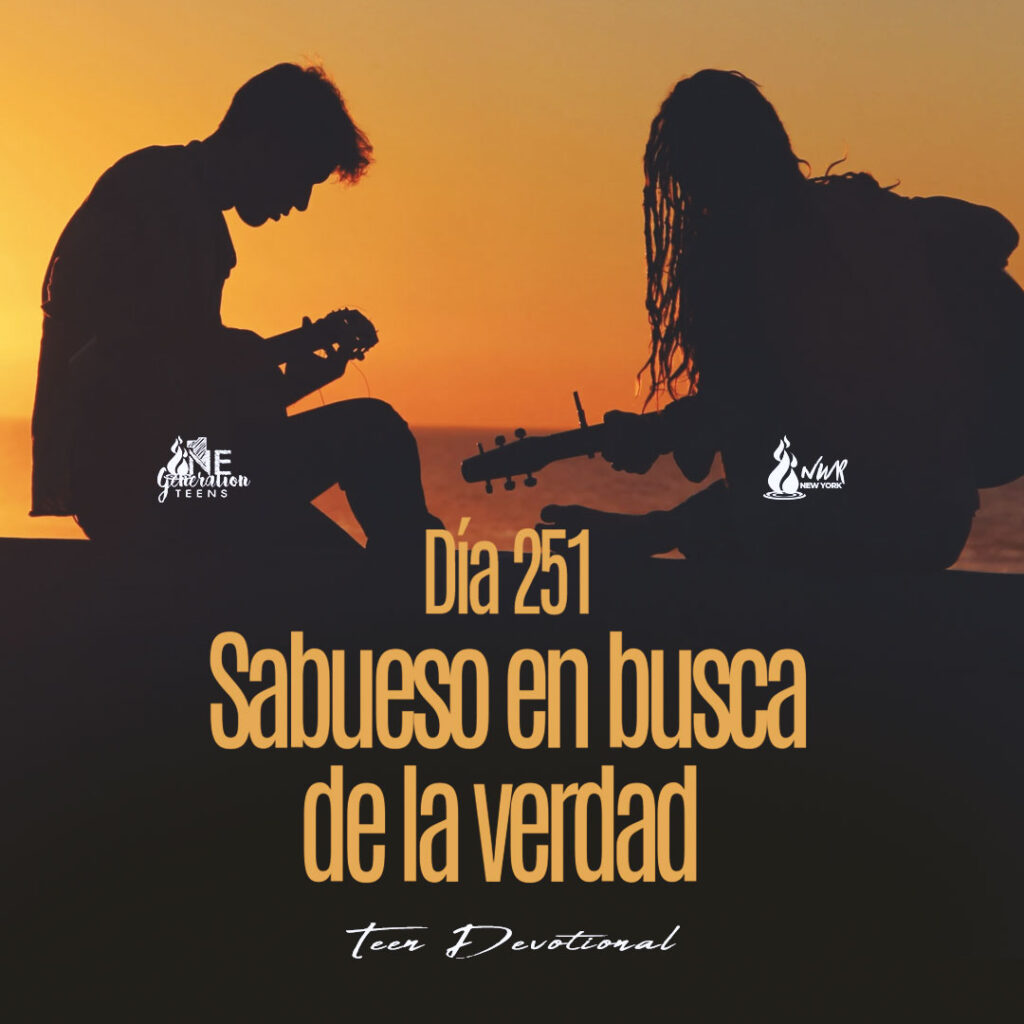
Day 251 • Sleuth for Truth
The devil led [Jesus] to Jerusalem and had him stand on the highest point of the temple. “If you are the Son of God,” [Satan] said, “throw yourself down from here. For it is written: ’He will command his angels concerning you to guard you carefully.’”
(LUKE 4:9−10)
A friend asks you to “partner” with him on a test. He says you’ll be sharing with each other and will both do better in class. But the teacher said this was a solo exam—no sharing, no cheating. Then your friend says, “Remember how the teacher told us that she wants us to help each other?” He’s right. Your teacher did say that. That’s what is so sneaky about temptation. The devil is sly. As a fallen angel, he knows God’s truth, and he uses little bits of truth to lure people into temptation. He even tried that trick on Jesus.
You see, if the Devil used full lies, people would catch on. “Hey, that’s a lie! We’re not falling for that trap,” they’d say. But if a temptation includes just a little truth, then it’s easier to go along with it. For instance, your friend reminded you what the teacher said about helping each other, but he left out the part about not cheating. It can be confusing. But real truth is complete. It is true one hundred percent of the time, not sometimes or only when it’s convenient. That’s why knowing God’s Word is important for spotting temptation. “Aha!” you’ll be able to say. “That is a temptation that will lead me to sin. I won’t be taken in.”
Prayer
Lord, temptation seems scary. Please help me not to be afraid but to trust you to lead me in truth and recognize lies that will lead me to sin and away from you.